The road from Baghdad to Babylon can take a traveller from a modern capital to one of humanity’s most resonant ancient landscapes in a matter of hours. That freedom is part of the appeal for tourists driving Iraq. Yet driving here is not simply a matter of collecting keys and following a map. It calls for preparation, local awareness and a realistic decision about whether self-driving suits your route.
For some visitors, especially those travelling with Iraqi family, fluent Arabic or Kurdish speakers, or an experienced local host, a car can open up meaningful journeys between cities, shrines, archaeological sites and quieter towns. For many first-time international visitors, however, a car with a trusted local driver is the more relaxed and practical way to experience the country.
Is self-driving in Iraq right for your trip?
Iraq is a country best approached with curiosity and care. Distances between major destinations can be manageable, but road conditions, traffic patterns, administrative requirements and local customs vary considerably by region. A journey that looks straightforward on a map may involve checkpoints, changing road surfaces, limited English-language signage and pauses that are difficult to predict.
Self-driving can make sense if you have experience driving internationally, are comfortable adapting to unfamiliar traffic environments and have reliable local support. It is often more suitable for diaspora visitors who know the roads, travellers visiting family, or those spending longer in one region with a locally arranged vehicle.
A driver-guided journey is usually the better choice if Iraq is your first visit, your itinerary includes several cities, or you are travelling for a religious visit with fixed timings. It also allows you to focus on the moments that matter: the call to prayer drifting across Najaf, a generous lunch offered in a family restaurant, the vast stillness around Ur, or an unhurried conversation over tea.
This is not a lesser form of travel. In Iraq, local knowledge is often part of the experience itself.
Documents, vehicle hire and insurance
Before making any driving plans, confirm entry and driving requirements directly with the relevant Iraqi authorities, your car hire provider and your travel insurer. Requirements can change, and the rules applying to an international visitor may differ from those for Iraqi citizens, residents or visitors entering via a particular region.
Ask specifically whether your national driving licence is accepted, whether you need an International Driving Permit, and whether any official translation or additional paperwork is required. Do not assume that documents accepted in one part of the country will automatically be accepted elsewhere.
Car hire for independent foreign travellers is less standardised than in many established holiday destinations. Major international-style hire desks may not be available where you arrive, and vehicles are often arranged through hotels, local operators, family contacts or established transport providers. If you do hire a vehicle, agree every detail in writing before departure: the vehicle’s condition, permitted travel area, roadside assistance, fuel arrangement, insurance cover and who is legally allowed to drive.
Insurance deserves particular attention. Check whether your travel insurance covers driving in Iraq and whether the vehicle has valid local third-party cover. Clarify what happens in the event of a breakdown or minor collision, and save the provider’s contact details offline. Photograph the vehicle from all sides before setting off, including tyres, windscreen, fuel gauge and any existing marks.
Understanding the roads and rhythm of traffic
Driving standards and road quality can vary from excellent multi-lane highways to uneven local roads requiring slower speeds and patience. In larger cities, traffic may feel energetic and closely paced. Lane discipline can be different from what British, European or North American drivers expect, while motorbikes, taxis, pedestrians and roadside activity all demand full attention.
Drive defensively rather than assertively. Leave more space than you think you need, avoid sudden turns or hard braking, and assume that another road user may change direction with little warning. After dark, driving becomes more demanding because lighting can be limited and hazards are harder to see. Unless you know the route well and have trusted local advice, plan to arrive before nightfall.
Navigation apps can be useful, but they should not be your only source of direction. Download offline maps before leaving your hotel, carry a charged power bank and ask a local contact to review your planned route. Place names may appear with different spellings in Arabic, Kurdish and English, so it helps to save destinations in more than one format.
Fuel is generally accessible on major routes, but do not treat this as a reason to drive with a near-empty tank. Fill up before longer intercity journeys, particularly when heading towards historic sites or rural areas. Keep drinking water, snacks, a phone charger, tissues and a basic first-aid kit in the car. These are simple preparations, but they make long travel days far more comfortable.
Checkpoints: approach with patience and respect
Checkpoints are part of road travel in Iraq and should be approached calmly. Slow down when directed, keep your documents readily available and follow instructions politely. Avoid taking photographs around checkpoints, official buildings, airports, bridges or other sensitive sites unless you have clear permission.
A local driver or guide can be especially valuable here. They understand the expected manner of communication, can explain your itinerary clearly and help ensure that documents are presented appropriately. Travellers should also allow extra time in their schedule rather than treating every journey as a fixed-duration transfer.
Routes worth considering
A well-planned road itinerary can connect Iraq’s history with its living culture. The route you choose should depend on the season, your interests and the local advice available when you travel.
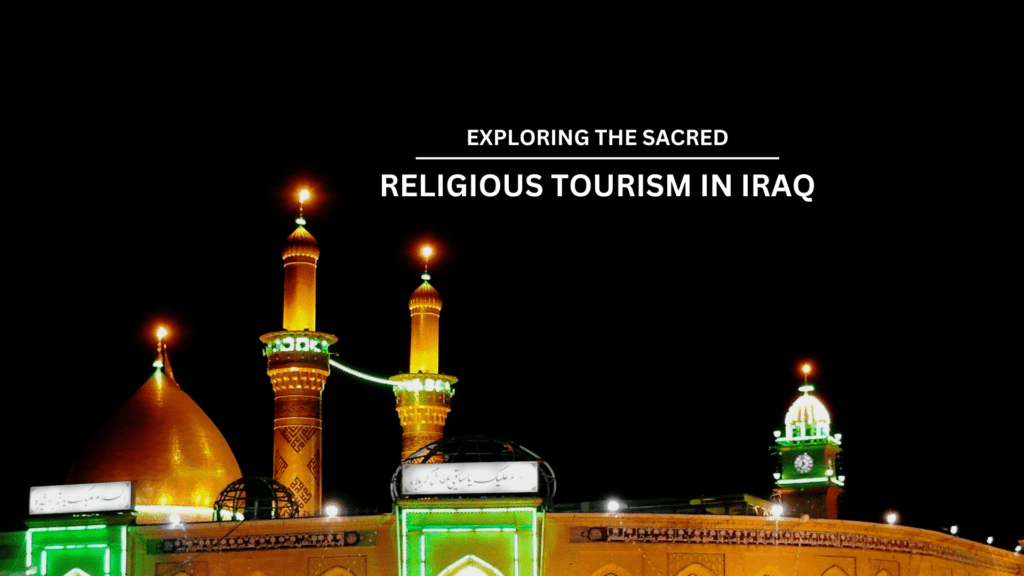
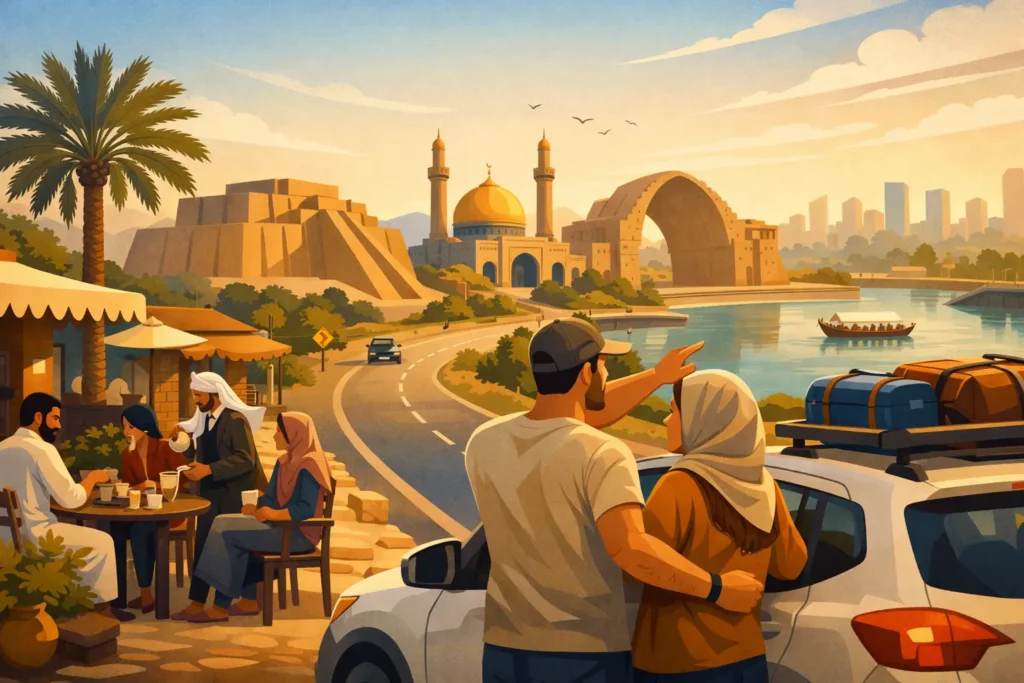
Baghdad is a natural starting point for many visitors, offering museums, markets, riverside views and an introduction to the country’s pace and hospitality. From there, a southbound journey can lead towards Babylon and Karbala, where heritage and religious significance sit close together. Najaf and Kufa offer deeply meaningful experiences for pilgrims and visitors interested in Islamic history, while Nasiriyah provides access to the landscapes and archaeological importance of ancient Sumer.
In the Kurdistan Region, road travel between Erbil, Duhok, Sulaymaniyah and mountain areas can offer a different rhythm, with changing scenery and distinct local character. Travellers should still confirm local regulations, weather conditions and road access before setting out, especially outside the cities or during winter.
Trying to cover the whole country by car in a few days is rarely rewarding. Iraq reveals itself through time: a stop for masgouf by the river, a detour to a local market, an evening in a welcoming hotel, or the chance to return to a site when the light is softer and the crowds have eased. Build in space for these moments.
When to choose a local driver instead
For most international travellers, booking a car and driver is the best balance of independence and reassurance. You still travel at your own pace, choose where to stop and shape the trip around your interests, but you benefit from someone who understands the roads and can handle the practical details.
A good driver can also make a journey more human. They may know which roadside restaurant makes the best kebab, when a shrine is busiest, where parking is easiest, or how to organise an unscheduled stop without fuss. If they speak your language well, they can add context without turning the day into a scripted tour.
Choose a driver through a reputable hotel, established travel provider or trusted local recommendation. Discuss the itinerary, daily hours, fuel, accommodation for the driver on overnight journeys, payment and cancellation terms beforehand. Be clear about whether you want a driver only or a licensed guide as well. The two roles can overlap, but they are not always the same.
Stay In Iraq encourages travellers to see transport as part of trip design, not an afterthought. The right arrangement can turn a complex route into a comfortable journey and leave more room for the country’s generosity, architecture, food and stories.
Road etiquette that travels well
Courtesy carries real value on Iraqi roads. Dress respectfully when stopping in smaller towns or religious destinations, greet people warmly and accept that plans may occasionally shift around local conditions. If someone offers help, tea or directions, respond with appreciation, while still using sensible judgement around your belongings and travel documents.
Avoid photographing people without asking, particularly in rural communities and places of worship. During religious occasions, roads and towns may be busier than usual, and travel requires additional patience. These periods can be profoundly moving for visitors, but they are best experienced with advance planning and respect for those travelling for devotion.
Keep cash available for fuel, parking, small purchases and unexpected needs. Card acceptance is improving in some settings but cannot be relied upon for every roadside stop. It is also wise to share your daily route with a trusted contact and keep your passport secure rather than carrying unnecessary valuables.
A road trip in Iraq is not about rushing from landmark to landmark. It is an invitation to travel with attention, to let a local recommendation change your plan, and to discover that the country’s most lasting impressions often arrive between the places you came to see.