Travelling alone in Iraq tends to provoke one immediate question from friends and family: why? Yet for many independent travellers, that is exactly the point. Solo travel Iraq offers something increasingly rare – a destination that still feels deeply human, layered with history, spirituality and everyday generosity, rather than curated for mass tourism.
It is not a place to approach casually, but it is also not a place that should be reduced to outdated assumptions. If you are considering Iraq on your own, the experience can be rewarding, moving and surprisingly manageable with the right preparation. The key is to arrive informed, flexible and respectful.
Is solo travel Iraq a good idea?
For the right traveller, yes. Iraq suits people who are comfortable with cultural difference, patient with logistics and genuinely interested in places beyond the usual tourist circuit. If your idea of a meaningful trip includes ancient cities, shrine complexes, riverside conversations, local food and real engagement with history, travelling solo here can feel exceptionally rich.
That said, Iraq is not a plug-and-play destination. Travel styles that work in Western Europe or parts of South East Asia do not always translate neatly. You may need to plan transport more carefully, confirm accommodation in advance and accept that some days will run on local rhythm rather than your own timetable. For many travellers, that is part of the appeal. For others, it may feel tiring.
The question is less whether solo travel is possible and more whether your expectations are realistic. Iraq rewards curiosity and patience far more than spontaneity for its own sake.
What kind of solo traveller enjoys Iraq most?
Independent travellers who do best in Iraq are usually those who value substance over convenience. Historians, photographers, diaspora visitors, pilgrims and culturally curious travellers often connect with the country quickly because they arrive looking for depth rather than polish.
If you need constant nightlife, highly standardised tourism services or an itinerary built around ease, Iraq may feel demanding. If, however, you appreciate being welcomed for a cup of tea, discussing local history with strangers, or wandering through places that shaped civilisation itself, travelling alone can open doors that group travel sometimes does not.
There is also a practical advantage to being solo. One person can move more easily, adapt faster and build conversations naturally. In Iraq, hospitality often begins with simple curiosity. A solo traveller may find that interactions happen more readily because people want to know where you are from and what brought you there.
Preparing for solo travel in Iraq
Preparation matters more here than in many mainstream destinations. Before you arrive, make sure your visa situation is clear for your nationality and entry point. Rules can change, and Iraq is a destination where relying on vague forum comments is unwise. Check current official guidance and build your itinerary around confirmed information, not assumptions.
Accommodation should also be arranged with care, especially if you are arriving late or moving between cities on a tight schedule. In major destinations, finding a place to stay is often possible, but solo travellers benefit from removing uncertainty where they can. After a long journey, knowing exactly where you are sleeping makes a real difference.
It is also worth thinking about connectivity, cash and language. Mobile data is useful for navigation and communication, cash remains important in many situations, and even a few polite Arabic phrases can go a long way. English is spoken in some travel-facing settings, but not everywhere. You do not need fluency, only a willingness to communicate respectfully.
Safety for solo travellers: confidence with context
Safety is usually the biggest concern, and it deserves a balanced answer. Iraq is not a destination to approach blindly, but neither is it helpful to treat the entire country as one uniform experience. Conditions vary by city, by route and by current circumstances, so sensible planning is essential.
For solo travellers, the most useful approach is grounded caution. Stay informed, choose recognised accommodation, share your plans with someone you trust and avoid unnecessary late-night movement in places you do not know. If a local host, driver or hotel receptionist advises a better route or timing, listen. Good travel judgement matters everywhere, but in Iraq it matters more.
Cultural awareness also contributes to personal comfort and safety. Dress modestly, especially in religious cities and shrine areas. Observe how local people carry themselves and follow that tone. This is not about blending in perfectly. It is about showing respect and reducing friction.
Women travelling alone may find Iraq both warm and complex. Many female travellers report kindness and protective hospitality, particularly in religious and family-oriented environments. At the same time, solo women may prefer extra structure with airport transfers, trusted drivers or carefully selected accommodation, especially on a first visit. That is not a weakness. It is smart travel planning.
Best places to consider on a solo itinerary
Not every destination suits every traveller, so your route should reflect your interests.
Baghdad appeals to travellers who want energy, history and a direct sense of Iraq as a living capital rather than an abstract headline. Its book markets, riverside atmosphere, museums and layered neighbourhoods can reward slow exploration. Solo travellers should allow time here rather than treating it as a transit stop.
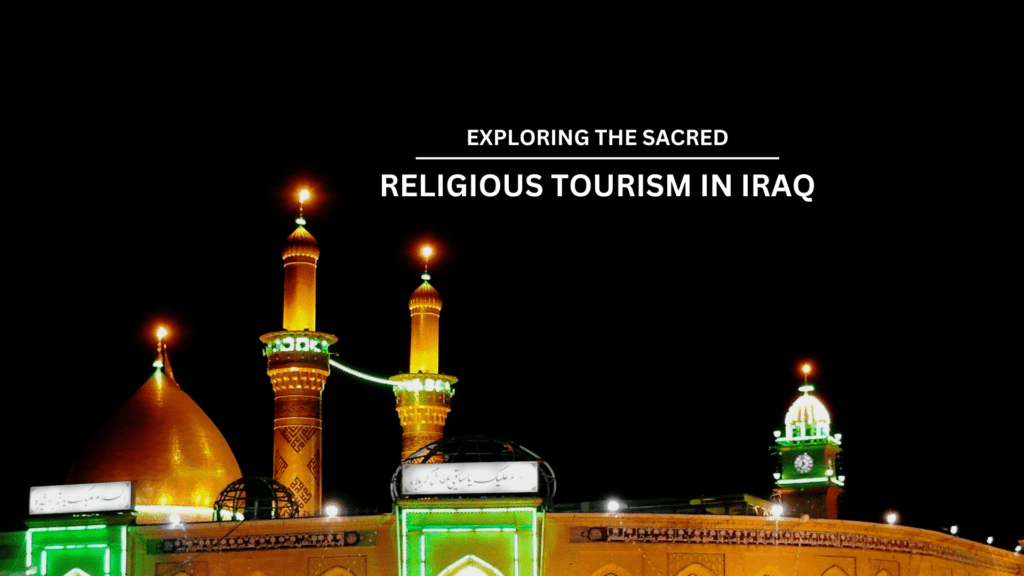
Najaf and Karbala are especially meaningful for religious visitors and those interested in spiritual heritage. They can also feel more navigable for some solo travellers because pilgrimage infrastructure brings a strong sense of movement, hospitality and purpose. Respectful dress and behaviour are especially important in these cities.
Mosul attracts travellers interested in resilience, heritage and the cultural significance of northern Iraq. A visit here often carries emotional weight. The city continues to evolve, and its appeal lies in both its history and its present-day character.
Basra offers a different mood altogether – southern, maritime and culturally distinct. For travellers interested in Iraq beyond the most discussed destinations, it can be deeply rewarding, though logistics may require more planning.
The Kurdistan Region, including Erbil and Sulaymaniyah, is often a comfortable starting point for first-time visitors travelling independently. Many solo travellers find it easier to navigate while still offering rich culture, food and history. For some, it serves as an introduction before travelling further into federal Iraq.
Getting around on your own
Transport is one of the areas where solo travel Iraq requires the most patience. Intercity travel is possible, but it is not always explained in the polished, bookable way many travellers are used to. Shared taxis, private drivers and locally arranged transfers are often part of the picture.
This does not make travel impossible. It simply means you should build in more margin. Avoid overpacking your itinerary with too many city changes in too few days. Iraq is best experienced with breathing space, and solo travellers particularly benefit from reducing unnecessary transport stress.
Within cities, ask your accommodation for current local advice. A short journey can be simple in practice but difficult to decode online. Trusted local guidance is often more useful than hours of internet research.
The social side of travelling alone in Iraq
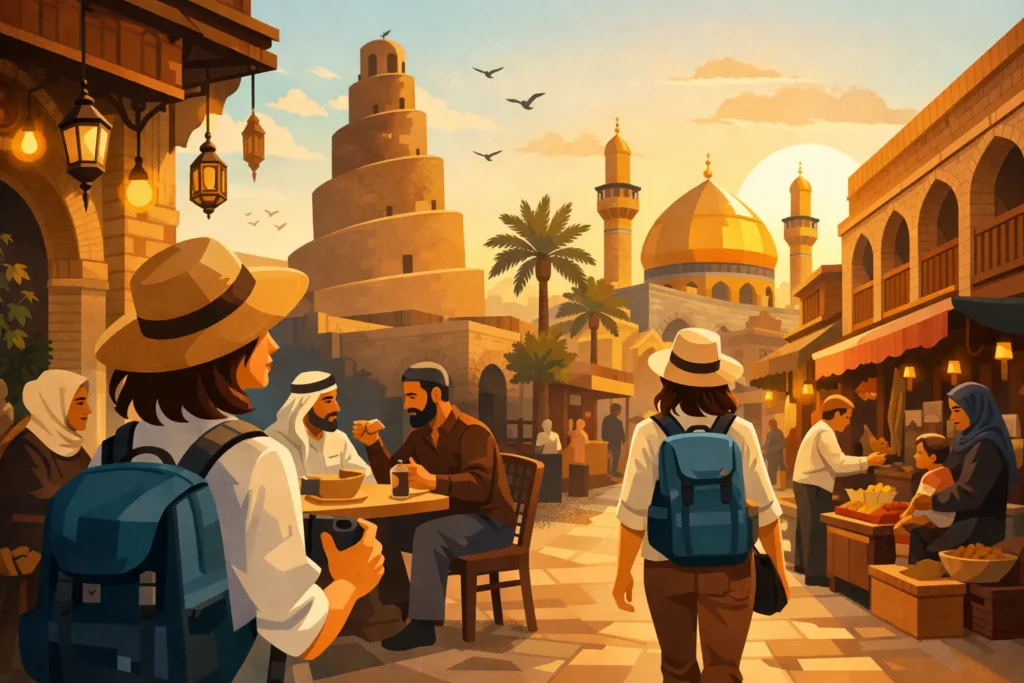
One of the most striking aspects of Iraq is how rarely a solo traveller stays socially alone for long. Curiosity is common, and hospitality is not a performance for tourists. Conversations happen in hotel lobbies, tea shops, markets and taxis. People may ask where you are from, whether you are enjoying Iraq, and what places you have visited.
This warmth is one of the country’s greatest strengths, but it helps to receive it with cultural sensitivity. Accept invitations thoughtfully, read the situation and be gracious without overcommitting. You do not need to say yes to everything. Respectful boundaries and openness can coexist.
For travellers who are used to highly individualistic destinations, Iraq can feel refreshingly communal. The journey is not only about monuments and sites. It is about being received, observed, welcomed and occasionally looked after by people who take genuine pride in their country.
Managing expectations as a solo traveller
The most successful trips are usually the ones built on the right mindset. Iraq may not always deliver convenience, but it often delivers meaning. A delayed departure, a language misunderstanding or an unexpected route change can be frustrating in the moment, yet these same trips often become the most memorable because they are shaped by real encounters rather than frictionless systems.
That does not mean romanticising inconvenience. Good planning still matters. But if you arrive expecting perfection, you may miss what makes the experience so distinctive. Iraq is compelling because it feels lived-in, not packaged.
For travellers planning a first independent visit, there is no shame in starting with a shorter route, more structured accommodation, or local support in certain cities. Confidence often grows quickly once you are on the ground.
Solo travel in Iraq is not about proving bravery. It is about travelling with intention through one of the world’s most historically significant and culturally generous countries. If you come prepared and stay open to the rhythm of the place, you may leave with something better than a standard holiday story – a fuller, more personal understanding of Iraq and the people who make it unforgettable.