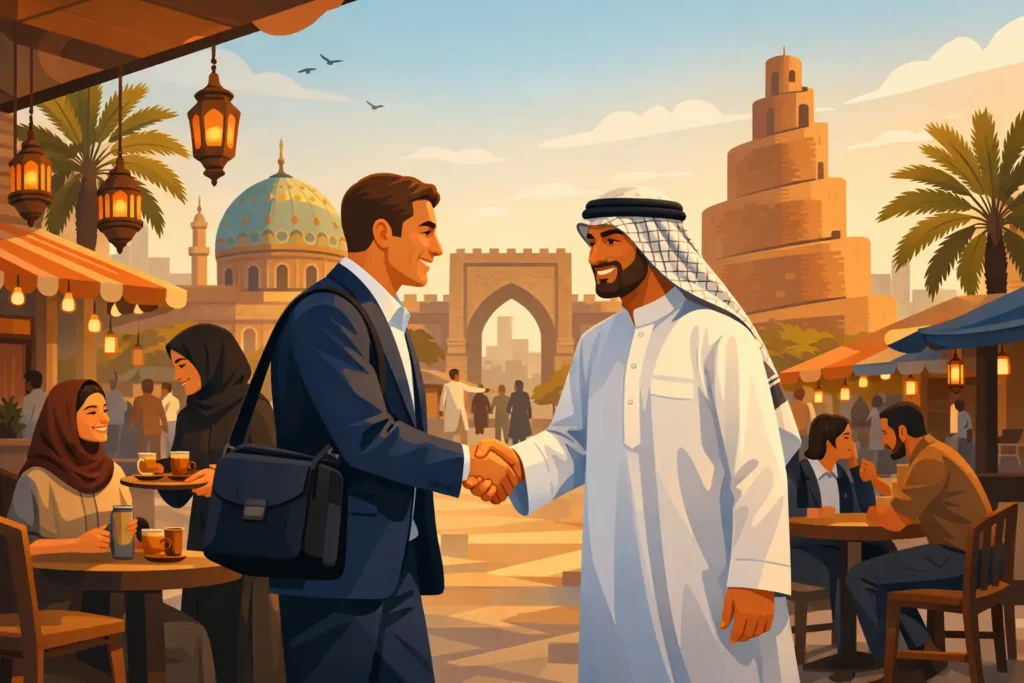
A first cup of tea in Iraq can say more about the country than a museum label. You may arrive as a visitor, but a warm welcome, a question about your journey and an invitation to sit are often the beginning of a genuine exchange. Learning how to respect Iraqi customs is not about memorising a rigid set of rules. It is about arriving with care, observing your hosts and allowing everyday kindness to guide your choices.
Iraq is home to many regional traditions, family customs and religious communities. What feels usual in Baghdad may be expressed differently in Basra, Erbil, Najaf, Karbala, Mosul or the marshlands. The most reliable approach is simple: be modest, patient and willing to ask. Most people will appreciate your interest far more than they expect perfection.
How to Respect Iraqi Customs From Your First Greeting
Greetings in Iraq are warm and often unhurried. A handshake is common between people of the same gender, particularly in professional settings. When greeting someone of a different gender, however, do not assume physical contact is welcome. Let the other person set the tone. A smile, a verbal greeting and a hand placed lightly over your heart are respectful alternatives.
“Salam alaikum” is widely understood and warmly received. The traditional reply is “Wa alaikum salam”. Even if your pronunciation is not perfect, making the effort signals respect. You may also hear Iraqi Arabic phrases such as “shlonak?” or “shlonich?” meaning “how are you?” for men and women respectively. Keep your greeting relaxed rather than overly rehearsed.
Use titles where appropriate, especially with older people or in formal settings. Addressing someone as uncle, aunt, brother or sister can be a sign of friendliness in everyday conversation, even when there is no family connection. Follow the language used by those around you rather than forcing familiarity too quickly.
Dress Modestly and Read the Setting
Modest dress is one of the clearest ways to show consideration, especially when visiting religious cities, shrines, mosques or family homes. For all travellers, clothing that covers shoulders and knees is a sensible baseline. Loose, lightweight garments are practical in warm weather and tend to feel more appropriate than very fitted or revealing clothing.
Women should carry a scarf for visits to mosques and shrines, where covering the hair may be required. In some holy sites, an abaya or chador may be provided or requested. Men should avoid shorts and sleeveless tops at religious locations. Remove shoes when entering a mosque, shrine or private home if your hosts do so, and wear clean socks if possible.
This does not mean every street or café follows the same standard. Iraq’s cities include modern shopping districts, university areas and hotels where dress may be more varied. Context matters. If you are unsure, choose the more modest option for the day, then take cues from local companions and your accommodation team.
Accept Hospitality With Grace
Hospitality is one of Iraq’s most memorable traditions. An offer of tea, coffee, a meal or a seat is rarely a casual gesture. It is a way of saying that you are welcome. If time allows, accepting at least a small refreshment can create a warmer connection than a hurried refusal.
You do not need to eat more than you are comfortable with, but decline gently and appreciatively. Saying thank you, explaining that you are full, or praising the meal is usually enough. Your host may offer again out of generosity, so a polite second refusal is normal when you truly cannot accept.
At the table, use your right hand for eating, passing food and receiving items where practical. The left hand is traditionally considered less appropriate for these actions. Meals are often shared, and bread may be used to gather food. Watch how others eat before joining in, particularly when dishes are served communally.
Complimenting food is always welcome. Iraqi cooking carries deep regional pride, whether you are served masgouf by the Tigris, fragrant rice and stew at a family table, or dates and tea after a long conversation. Avoid rushing through a meal. The conversation around it is often as meaningful as the food itself.
Respect Faith and Sacred Places
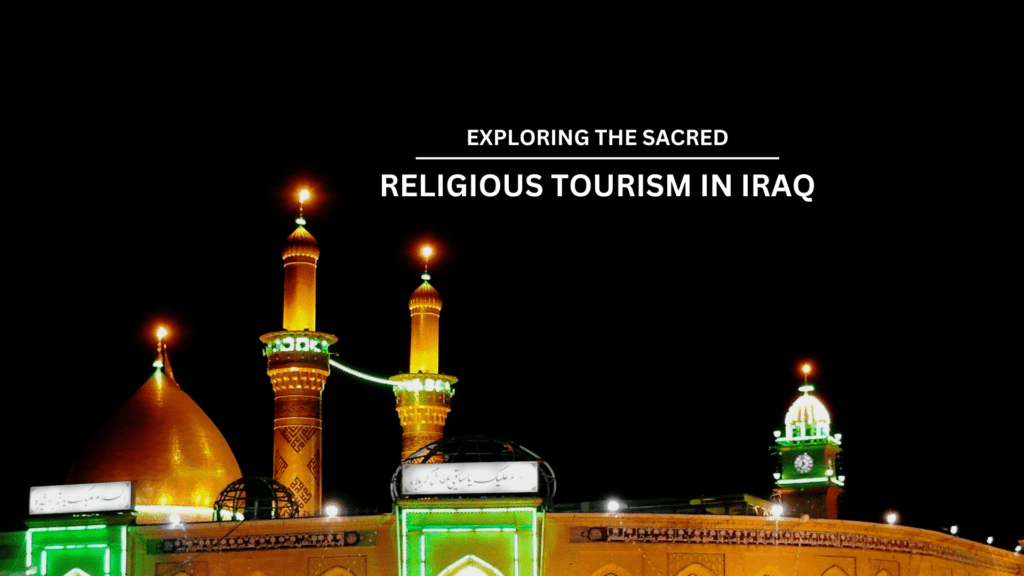
Iraq is one of the world’s great destinations for religious and spiritual travel. Its sacred sites are living places of worship, remembrance and community, not simply historic attractions. Enter with a quieter manner, dress appropriately and follow instructions from staff or local guides.
At mosques and shrines, ask before taking photographs. Some spaces may permit images in certain areas but not near worshippers, tombs, prayer halls or security points. Never photograph people praying without clear permission. During major religious occasions, cities and holy sites can become especially busy, and patience is part of respectful participation.
If you are visiting during Ramadan, avoid eating, drinking or smoking conspicuously in public during daylight hours, particularly in conservative areas. Many restaurants and hotels continue to serve travellers, but discretion matters. After sunset, you may be invited to share iftar, the meal that breaks the fast. It is a generous experience, and arriving on time, dressing modestly and expressing thanks are good manners.
Religious identity in Iraq is personal and deeply meaningful. Let local people lead any discussion about belief, practice or sacred history. Curious questions asked with humility are usually welcome; debates, assumptions and comparisons are less useful.
Ask Before You Photograph
Iraq’s architecture, markets, landscapes and street life are remarkably photogenic, but a considerate photograph begins with consent. Always ask before taking a close portrait, especially of women, older people, families, children, shopkeepers or people in prayer. A gesture towards your camera and a friendly question often works when language is limited.
Be particularly careful around shrines, government buildings, checkpoints, transport hubs and official facilities. Restrictions can vary, and the right response is to put the camera away immediately if asked. Do not use people’s homes, grief, religious practice or private moments as a backdrop for social media.
When permission is given, show the image on your screen and thank the person. This small exchange turns photography from taking something into sharing a moment.
Let Conversation Be Curious, Not Assumptive
Many Iraqis are proud to speak about their city, family heritage, food, poetry, football, music and ancient history. Asking a local what they recommend in their own neighbourhood can lead to far better experiences than relying only on a guidebook. It also recognises Iraq as a living country, not a collection of archaeological sites.
At the same time, avoid treating people as spokespeople for the whole nation. Iraq contains many languages, landscapes and traditions. Someone from the Kurdistan Region may describe daily life differently from someone in southern Iraq, and both perspectives deserve space.
Questions about family are common and usually friendly. You may be asked whether you are married, where you are from, or why you have come to Iraq. Answer only what feels comfortable, but do not mistake directness for intrusion. In many cases, it is an effort to place you warmly within a conversation.
Everyday Manners That Make Travel Easier
Public behaviour is generally more reserved than in many European cities. Keep displays of affection discreet, use a calm tone in shared spaces and avoid loud behaviour that draws attention to yourself. If a queue appears informal, observe for a moment rather than pushing forward.
Bargaining can be part of shopping in traditional markets, but it should remain good-humoured. Ask the price, make a reasonable counter-offer and accept a no with a smile. Pressing too hard over a small amount can feel discourteous when you are a guest in someone’s business.
Punctuality can be flexible in social life, while formal appointments may be more structured. If you are invited to a home, a small gift such as sweets, pastries or fruit is thoughtful, though never required. Avoid bringing alcohol unless you know your hosts well and are certain it is appropriate.
Learning a few phrases, carrying cash for smaller purchases and dressing with the day’s plans in mind will help you move through Iraq with confidence. More than any phrasebook, though, your willingness to slow down and listen will be remembered.
Iraq rewards travellers who look beyond the itinerary. When you accept tea, ask permission, dress thoughtfully and make room for local rhythms, you are not merely following etiquette. You are taking part in the human connection that makes a journey through Iraq stay with you long after you return home.