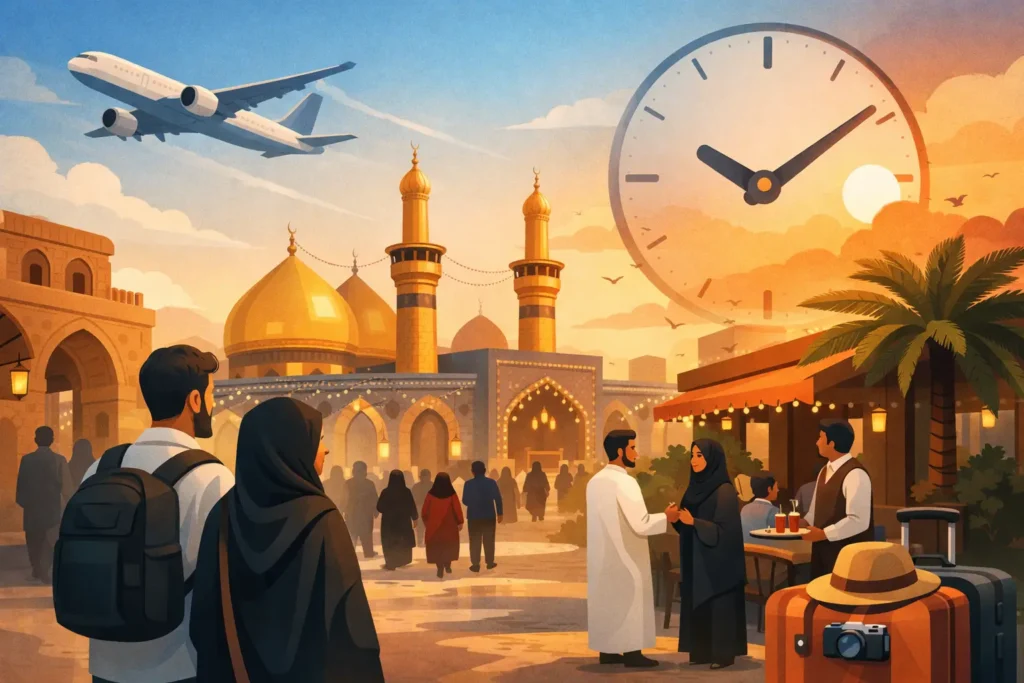
Karbala changes character with the calendar. On a quiet winter morning, the courtyards around the holy shrines feel reflective and spacious, inviting visitors to slow down. During the great pilgrimage periods, the city becomes a powerful gathering of faith, service and shared purpose. The best time for Karbala therefore depends on what has brought you there: private worship, the Arbaeen pilgrimage, family reconnection, history, or a wider journey through Iraq.
For many international visitors, the most comfortable answer is between November and March, when daytime conditions are usually milder for walking between shrines and exploring the city. Yet for pilgrims, religious dates can matter far more than the weather. Planning well means balancing climate, crowd levels, accommodation availability and the spiritual experience you hope to have.
Best time for Karbala: November to March
Late autumn, winter and early spring are generally the most pleasant months for travellers who want time and space to experience Karbala beyond its busiest religious occasions. Days are often comfortable for walking, while evenings can be cool, particularly between December and February. Pack layers rather than relying on one heavy item of clothing, as temperatures can vary noticeably from day to night.
This period suits first-time visitors, heritage travellers and families who wish to visit the shrines at a gentler pace. It is also a practical time to combine Karbala with Najaf, Baghdad, Babylon or other destinations in central and southern Iraq. With fewer major pilgrimage pressures on local transport and hotels, you may have more choice over where to stay and how to organise your days.
Do not assume that a quieter period means an empty city. Karbala remains one of the world’s most important religious destinations, and visitors arrive throughout the year. Fridays, school holidays and significant dates in the Islamic calendar can still bring large numbers of pilgrims. A little flexibility around arrival times and accommodation location makes a meaningful difference.
Arbaeen: the most powerful time to visit
For many Shia Muslims, Arbaeen is the defining answer to the question of when to visit Karbala. Observed 40 days after Ashura, it commemorates the end of the mourning period for Imam Hussein and brings pilgrims from Iraq and around the world to his shrine. The scale of the journey is extraordinary, but its most memorable quality is often the generosity encountered along the way.
Pilgrims commonly walk towards Karbala from nearby cities and towns, supported by community-hosted service stations known as mawakeb. These offer food, water, rest, medical assistance and practical help without expectation of payment. For visitors, this is not simply a large event to observe. It is an expression of devotion, hospitality and collective care that should be approached with humility.
Arbaeen follows the Islamic lunar calendar, so its Gregorian dates move around 10 to 11 days earlier each year. It may fall in cooler or much warmer conditions depending on the year. Confirm the dates well before making arrangements, especially if your trip involves flights, ground transport or a hotel stay in Karbala, Najaf or Baghdad.
The trade-off is clear: Arbaeen offers a uniquely moving atmosphere, but it demands patience and advance preparation. Accommodation fills early, roads and transport routes can be exceptionally busy, and travel times are longer than usual. Travellers who prefer quieter worship, straightforward logistics or more personal space may find another time of year more suitable.
Visiting respectfully during Arbaeen
Dress modestly and choose practical, comfortable footwear. Keep your belongings light, carry essential medicines, and accept that mobile coverage or meeting arrangements may be less reliable in dense crowds. Follow local instructions, respect designated walking routes and avoid treating pilgrims or devotional moments as content opportunities.
Photography requires particular sensitivity. Always ask before taking close portraits, especially of families, volunteers and people praying. The most respectful photographs tend to focus on place, detail and atmosphere rather than interrupting an intimate moment of worship.
Ashura: a time of remembrance
Ashura, on the 10th day of Muharram, marks the martyrdom of Imam Hussein at Karbala in 680 CE. It is among the most solemn and significant dates in the Shia calendar. Visitors will encounter mourning gatherings, recitations and large numbers of worshippers focused on remembrance, grief and moral reflection.
Ashura can be deeply meaningful for pilgrims with a personal religious connection to the occasion. It is not, however, the best choice for every visitor. The city is busy, accommodation can be limited, and the mood is solemn rather than touristic. If you attend, allow the purpose of the commemoration to set the tone of your visit. Wear modest clothing, avoid loud or casual behaviour near religious gatherings, and follow the guidance of local hosts and shrine staff.
As with Arbaeen, Ashura shifts annually in the Gregorian calendar. Check official local announcements closer to your travel dates, as lunar observations can affect the final timing.
Spring and autumn for a balanced Karbala visit
October, November, March and April can offer an appealing middle ground. The weather is usually more manageable than the hottest part of summer, while the city may feel less intense than during the major pilgrimage peaks. These months work particularly well for travellers seeking a balanced itinerary: time for the shrines, unhurried walks through local streets, Iraqi meals with family or hosts, and onward travel to neighbouring cities.
Spring can bring warmer afternoons, while autumn often feels calmer after the summer heat. Both seasons reward an early start. Visiting the shrines in the morning allows for a more contemplative experience and leaves the middle of the day free for rest, local food or travel planning.
If you are travelling during Ramadan, expect daily rhythms to change. Many visitors value the spiritual atmosphere of the evenings, while others may find daytime services and meal schedules different from what they expect. Respect those fasting, dress conservatively and plan around later evening activity. Ramadan’s dates also move each year because it follows the lunar calendar.
Summer in Karbala: possible, but plan carefully
Karbala can be very hot from June to September, with intense daytime sun. Summer travel is possible, particularly for those visiting family or travelling for a specific religious purpose, but it requires a more careful routine. Plan shrine visits for early morning or after sunset, drink water regularly and allow time to rest during the hottest hours.
Choose accommodation with reliable cooling and a location that reduces unnecessary journeys in the heat. A stay within practical reach of the shrine area can make a significant difference, although availability and pricing vary around religious dates. For older travellers, young children and anyone unaccustomed to high temperatures, the cooler months are usually the more comfortable option.
Choosing the right dates for your travel style
The best time is not identical for every traveller. A pilgrim wishing to join a global act of remembrance may consider Arbaeen worth the crowds and logistical effort. Someone seeking extended prayer time may prefer a quieter winter weekday. A diaspora family may choose dates around school breaks or religious commemorations, while a photographer or culture-focused traveller may favour mild weather outside the largest gatherings.
Before confirming your itinerary, check the Islamic calendar alongside the Gregorian one. Important observances affect hotel demand, road access, local transport and the pace of the city. Booking accommodation early is particularly sensible for Ashura, Arbaeen, Ramadan and major religious holidays. Stay In Iraq can help travellers compare accommodation options as they shape a wider Iraq itinerary.
It is equally wise to leave room for local rhythm. Karbala is not a place to rush through between appointments. The call to prayer, the flow of pilgrims and the hospitality of residents often reshape the day in the best possible way.
Practical preparation for any season
Modest, loose-fitting clothing is appropriate throughout the year and especially important around shrine areas. Women may be asked to wear a head covering at religious sites, and all visitors should follow dress requirements provided at entrances. Bring footwear that is easy to remove and comfortable for walking, as shoes are not worn inside many sacred spaces.
Carry a copy of your travel documents, a portable charger and any necessary medication. During busy dates, arrange a clear meeting point if travelling with companions, rather than relying only on mobile phone contact. If you are unfamiliar with local customs or Arabic, travelling with a knowledgeable guide or trusted local contact can make the visit easier and more rewarding.
Above all, arrive with patience. Karbala welcomes people from many countries, languages and backgrounds, but its spiritual life is not a spectacle. The most lasting visits are often those made with time to listen, observe and accept the hospitality offered with such generosity.
Whether you come in a cool, quiet month or walk alongside pilgrims at Arbaeen, Karbala offers more than a date on an itinerary. Give the city the time and respect it deserves, and its human warmth will stay with you long after the journey ends.