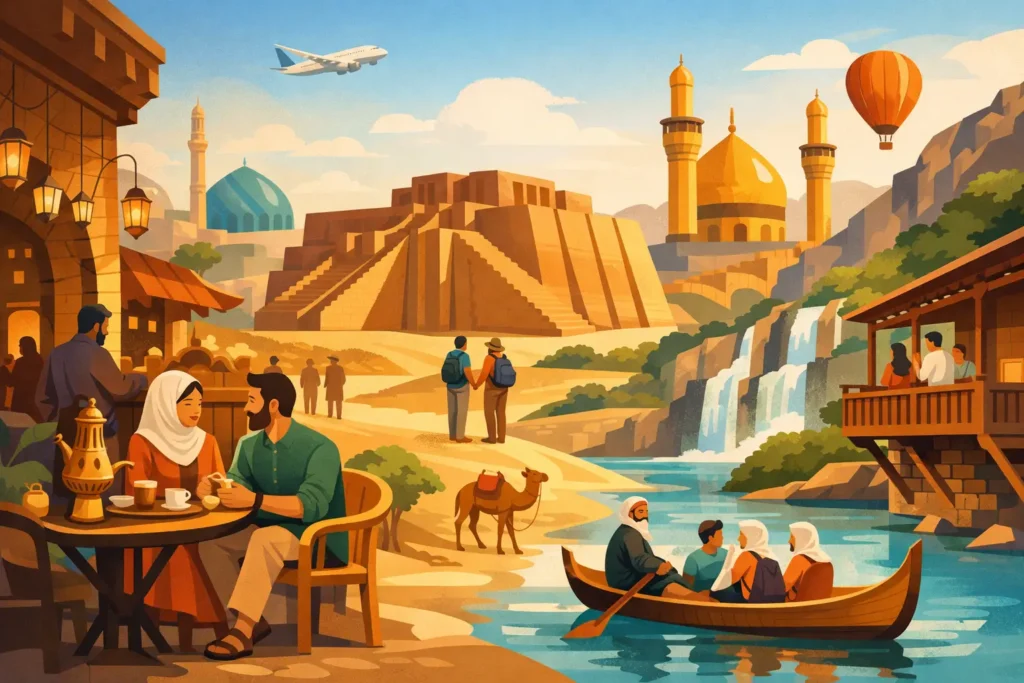
Some trips are built around landmarks. Iraq stays with you because of moments: the call to prayer rolling across an old quarter at dusk, tea shared with strangers who insist you sit longer, a marsh boat moving through reeds that have shaped life for thousands of years. For travellers looking for unique experiences in Iraq, the country offers far more than famous names on a map. It offers depth, memory and genuine human connection.
What makes Iraq distinctive is not only its history, though that history is extraordinary. It is the way ancient sites, living religious traditions, regional cuisines and everyday hospitality still shape the journey. The most rewarding trips here are rarely rushed. They are built around curiosity, respect and enough time to let each place reveal itself properly.
Why the most unique experiences in Iraq feel personal
In many destinations, standout experiences are carefully staged. In Iraq, the most memorable ones often feel unfiltered. You may arrive for archaeology and leave talking just as much about the family who welcomed you for lunch, the bookseller who explained his city with pride, or the shrine courtyard that changed pace completely after sunset.
That does not mean every experience is effortless. Iraq rewards travellers who plan well, ask questions and stay flexible. Distances can be longer than expected, and some places are best visited with local support or a driver who understands the route and rhythm of the area. Yet that practical effort is part of what keeps the country meaningful rather than over-packaged.
1. Watching sunrise over the ziggurat of Ur
Few places make the scale of ancient Mesopotamia feel as immediate as Ur. The great ziggurat near Nasiriyah is one of Iraq’s most recognisable archaeological sites, but seeing it early in the day changes the experience. The light is softer, the air is quieter, and the geometry of the structure stands out against the open landscape in a way that photographs never quite capture.
This is not simply a stop for history enthusiasts. For many visitors, Ur creates a rare sense of continuity. You are standing in a place linked to some of the earliest urban civilisations, yet the setting remains calm and direct rather than theatrical. If you are interested in archaeology, this is essential. If you are not, it can still become one of the most moving parts of the journey.
2. Gliding through the Mesopotamian Marshes by mashoof
The marshes in southern Iraq offer one of the country’s most distinctive landscapes. Travelling by mashoof, the traditional narrow boat used by Marsh Arab communities, is less about sightseeing in the usual sense and more about entering a way of life shaped by water, reeds and seasonal rhythms.
It is a quiet experience, which is precisely why it matters. Water buffalo move slowly through the channels, reed houses rise from the banks, and conversation tends to happen at an unhurried pace. Visitors expecting a polished tourism product may find it simple. That simplicity is the point. The marshes are best understood through presence, not spectacle.
If time allows, combine the boat journey with a meal or tea hosted locally. The hospitality often becomes as memorable as the landscape itself.
3. Feeling the spiritual atmosphere in Najaf and Karbala
For many travellers, especially religious visitors and those interested in sacred history, Najaf and Karbala are among the most profound destinations in Iraq. Even for those who come as respectful observers rather than pilgrims, the emotional atmosphere of these cities is unmistakable.
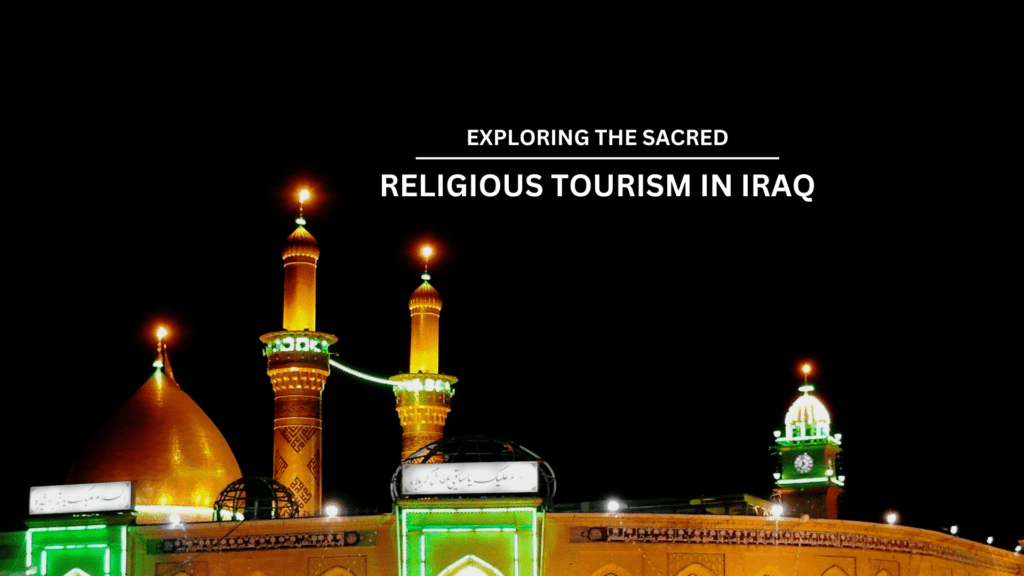
In Najaf, the shrine of Imam Ali holds immense significance and draws visitors from across the world. Karbala carries its own depth through the shrines of Imam Hussein and Abbas. These are not places to treat casually or as quick photo stops. They require modest dress, cultural awareness and time.
The reward for approaching them thoughtfully is considerable. Beyond their religious importance, they reveal Iraq at its most generous and collective. Courtyards fill with prayer, families gather, food is offered freely, and the sense of shared devotion is powerful. Travellers interested in spirituality, architecture or lived religious culture often find these visits unforgettable.
4. Walking Baghdad’s old streets and book markets
Baghdad is one of those cities that asks for patience. It is layered, busy and better understood through neighbourhoods than through a checklist. A walk through older parts of the capital, especially around Mutanabbi Street and nearby heritage areas, can become one of the most rewarding urban experiences in the country.
Booksellers, cafés, historic facades and everyday street life all contribute to the feeling that Baghdad is not simply a city of the past, but a place still actively shaping its cultural identity. Friday can be especially lively around the book market, with readers, writers and families giving the area its particular energy.
The experience here is not about grand perfection. Some buildings are restored, others less so. That mix is part of Baghdad’s truth. It feels inhabited, intellectually alive and deeply rooted.
5. Seeing Babylon beyond the textbook
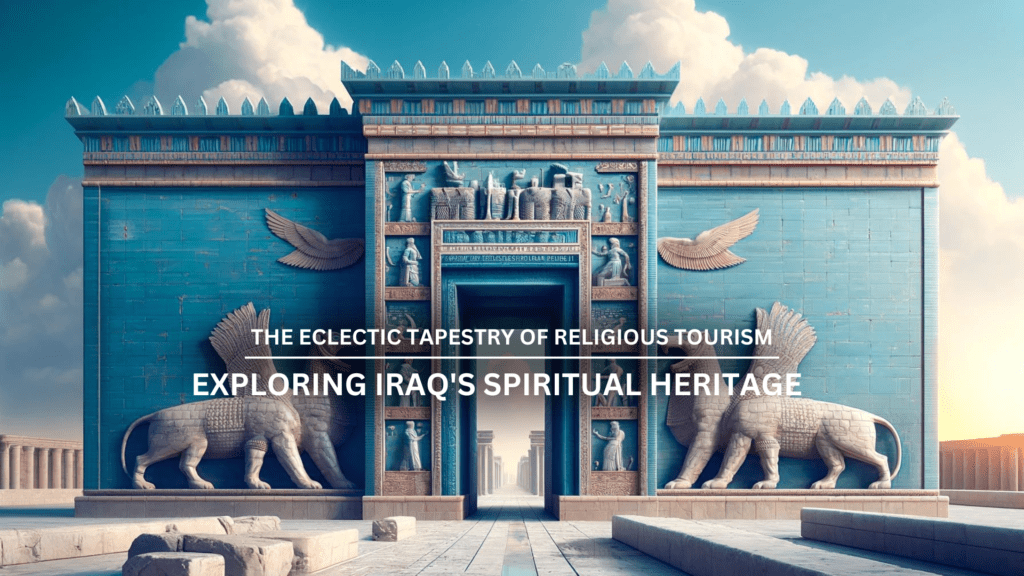
Babylon is one of the world’s most recognisable ancient names, but visiting it in person is a different kind of encounter. The site near Hillah invites travellers to reconsider what they think they know. Instead of a distant civilisation trapped in schoolbook imagery, Babylon becomes a physical place with walls, pathways and an unmistakable sense of scale.
The experience depends partly on expectations. If you arrive expecting a single untouched ruin, you may miss the broader significance of the site. Babylon is best appreciated with context – historical, archaeological and cultural. A knowledgeable guide can make a substantial difference here, helping visitors understand what they are seeing and where interpretation remains complex.
For travellers interested in the foundations of urban civilisation, this is one of the defining experiences in Iraq.
6. Sharing a slow meal in a traditional restaurant
Some of the best travel memories in Iraq begin at the table. Whether you are eating masgouf in Baghdad, quzi in a family-style setting, fresh bread with grilled meat, or simple dishes served with salads, pickles and endless tea, food here is rarely just functional.
Iraqi dining has a social rhythm. Meals are generous, portions are often substantial, and conversation matters as much as the dish itself. If you have the chance to eat somewhere recommended by locals rather than only in familiar hotel settings, take it. You will often get a better sense of the city and its character.
There is also regional variation worth paying attention to. Southern cuisine, Baghdadi favourites and shrine city hospitality all offer different flavours and customs. Travellers who leave room in their itinerary for food usually understand Iraq more fully.
7. Visiting Erbil Citadel and the life around it
The Citadel of Erbil is one of the oldest continuously inhabited settlement sites in the world, but what makes a visit compelling is not only the mound itself. It is the relationship between the citadel and the city around it – the square below, the movement of shoppers, the nearby market streets and the contrast between deep history and modern urban life.
Erbil often feels accessible for first-time visitors to Iraq, which can make it a useful starting point. The pace is manageable, accommodation options are broad, and the city provides a practical base for travellers who want cultural depth without immediately taking on a more complex route.
That said, accessibility should not be mistaken for superficiality. Erbil rewards slow exploration, especially if you take time to move beyond the obvious viewpoints and into the surrounding bazaars.
8. Getting lost, briefly, in a traditional bazaar
There is a particular pleasure in walking through an Iraqi market without trying to control every minute. Spice stalls, fabrics, household goods, sweets, perfumes and street snacks all create a sensory experience that no museum can replace. In cities such as Baghdad, Najaf, Karbala, Basra and Erbil, bazaars reveal local habits as much as local commerce.
This is where travellers often notice the warmth of everyday interaction. Shopkeepers may ask where you are from. Families may offer advice. Someone will almost certainly point you towards tea. Buying something is not always the central point. Being present is.
As with anywhere, respect matters. Ask before photographing people, dress appropriately for the setting, and recognise when a market is a working local space rather than a performance for visitors.
9. Following date palms and waterways in Basra
Basra gives Iraq a different register. The city’s relationship with waterways, palms, trade and Gulf-linked culture creates an atmosphere distinct from Baghdad or the shrine cities. It is a place where riverfront views, boat movement and food all shape the experience.
For some travellers, Basra feels less immediately monumental than ancient sites or major shrines. That is exactly why it can be so rewarding. The appeal is atmospheric. It lies in river evenings, old houses, local seafood and conversations about the city’s place in Iraq’s wider story.
If your interest in travel leans towards ports, layered urban identities and slower observation, Basra deserves time rather than a rushed stop.
10. Accepting Iraqi hospitality when it appears
Of all the unique experiences in Iraq, this is the one travellers mention most after they return. Hospitality here is not an accessory to the trip. It is one of its defining features. You may be invited for tea in a shop, welcomed into a guest space, or helped by someone who simply wants your visit to go well.
There is a balance to keep. Travellers should remain sensible, respectful and aware of local norms. But arriving with openness matters. Iraq is often best understood through its people, and the warmth extended to visitors frequently challenges assumptions more effectively than any itinerary can.
For that reason, the most successful trips are usually not the ones packed with the highest number of stops. They are the ones that leave room for conversation, detours and the small acts of generosity that make a place feel real.
If you are planning a journey and wondering whether Iraq can offer something genuinely different, the answer is yes – not because it tries to imitate better-known destinations, but because it does not. Travel here asks a little more of you, yet it gives back experiences that feel grounded, memorable and difficult to find anywhere else.